Updated October 2026.
HEMA-free is one of the hottest terms in the nail industry right now – and rightly so. More and more nail technicians and clients ask for HEMA-free products, but there is also a lot of confusion about what it actually means. In this guide we explain what HEMA is, why some people react to it, what TPO-free means and how to choose the right products for you and your clients.
Short answer: HEMA-free means the acrylate HEMA (hydroxyethyl methacrylate) is not included in the product – but that does not automatically mean the product is free from closely related substances such as Di-HEMA, HPMA or IBOA. Always check the ingredient list (INCI). Build & Boost HEMA Free and Flex & Boost are free from HEMA, Di-HEMA and HPMA, and Sculpt & Boost is also free from IBOA, according to the manufacturer.
What is HEMA?
HEMA (hydroxyethyl methacrylate) is a small, reactive monomer used in many gel products, gel polishes and nail adhesives. It is popular for a simple reason: it gives excellent adhesion to the nail plate and a smooth, strong result.
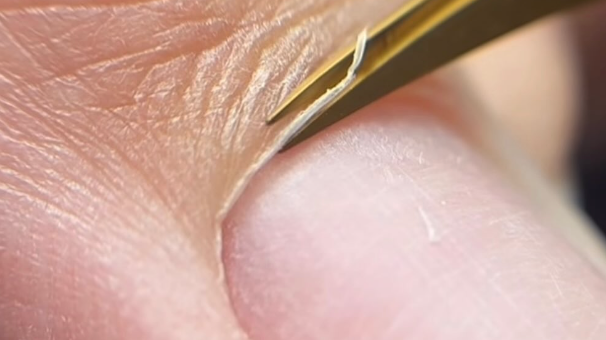
The problem is that its small molecular size lets HEMA penetrate more easily through uncured gel that ends up on the skin – and with repeated skin contact it can lead to contact allergy. Once developed, this allergy is lifelong.
How does a HEMA allergy develop?
The key thing to understand: it is uncured product on the skin that causes allergy – not the fully cured nail. The risk increases with:
Sloppy application. Gel that touches the cuticle or skin and is not wiped away before curing.
Under-curing. The wrong lamp, too short a curing time or layers that are too thick mean the gel does not cure all the way through – and uncured monomers remain.
Dust when filing. Filing dust from under-cured gel still contains reactive substances.
That is why clean application technique and the right lamp are always the first line of defence – whichever product you use.
When is HEMA-free the right choice?
HEMA-free products use larger monomers that have a harder time penetrating the skin, which greatly reduces the risk of sensitisation. It is a wise choice if you:
• Work as a nail technician and are exposed to products daily
• Have clients with sensitive skin or a confirmed HEMA allergy
• Simply want to minimise risks in your salon from the start
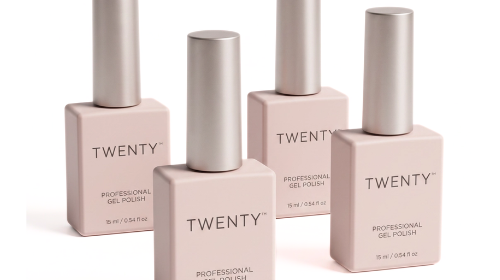
With us you will find TWENTY's HEMA-free range – from base to top. That means you can build a complete HEMA-free treatment: Build & Boost HEMA-free builder gel, gel colours and top coat.
Wondering which builder gel suits you best? We compare our HEMA-free systems by viscosity, removal and use in the guide the best HEMA-free builder gel – how to choose.
HEMA-free is not the same as HPMA-free
Many HEMA-free products replace HEMA with closely related substances, for example HPMA (Hydroxypropyl Methacrylate), which can also cause contact allergy. Di-HEMA and IBOA (Isobornyl Acrylate) are other acrylates that some sensitive clients react to. A product can therefore be "HEMA-free" and still contain HPMA. With us, Build & Boost HEMA Free and Flex & Boost are free from HEMA, Di-HEMA and HPMA, and Sculpt & Boost is free from HEMA, Di-HEMA, HPMA and IBOA (according to the manufacturer). Always look at the INCI list, regardless of what the packaging says.
And what is TPO-free?
TPO (trimethylbenzoyl diphenylphosphine oxide) is a photoinitiator that makes gel cure under UV/LED light. From 1 September 2025 TPO is banned in cosmetic products within the EU. All products we sell are of course TPO-free and comply with the EU Cosmetics Regulation – something you should always check when buying gel products from foreign web shops.
Frequently asked questions
Are all HEMA-free products free from HPMA?
No. HPMA is often used as a replacement for HEMA and can also cause contact allergy. Check the ingredient list. Build & Boost HEMA Free and Flex & Boost are free from HEMA, Di-HEMA and HPMA according to the manufacturer.
Is HEMA-free lower quality?
No – modern HEMA-free systems like TWENTY's give the same strength, shine and durability. The difference is mainly that adhesion requires correct nail preparation, which you as a professional already do.
Can I use HEMA-free if I have already developed an allergy?
Often yes, but not always – some people react across to other acrylates. Always consult a dermatologist and do a patch test before resuming treatments.
Does the whole system have to be HEMA-free?
Yes, for full effect. HEMA-free colour is not enough if the base coat contains HEMA – every layer that can come into contact with skin should be free.
How do I know if a product is HEMA-free?
Check the ingredient list (INCI) – look for "HEMA", "Hydroxyethyl Methacrylate", "Di-HEMA", "Hydroxypropyl Methacrylate" (HPMA) and "Isobornyl Acrylate" (IBOA). With us, all HEMA-free products are clearly labelled and gathered in a dedicated collection.
Curious to try? Discover our full HEMA-free range from TWENTY here.